Organization Design & Development : Direction, Performance, Renewal
- How do we design structures, functions, roles, and decision-making processes so that our organization is effective today and adaptable tomorrow?
- Where do we need clear, stable units—and where do we need flexible, cross-functional, or temporary forms of collaboration?
- How do we align strategy, leadership, and people’s potential and capabilities to foster performance and innovation?
Organizations are constantly changing: driven by new markets, digitalization and artificial intelligence, new business models, or strategic decisions. In the process, structures, processes, and responsibilities can easily become misaligned. Decisions take too long, interfaces create bottlenecks, and good ideas lose momentum in day-to-day operations.
Effective organizational development means intentionally designing how value is created and decisions are made. It establishes clear roles and responsibilities, robust decision-making pathways, and appropriate forms of collaboration. The key question is not “traditional or agile,” but rather: Where is stability essential – and where do we need more flexible, cross-functional, or temporary structures?
In this way, organizational development becomes the link between strategic direction and day-to-day operations. Clear unit disign provides orientation. Flexible forms of collaboration create space for innovation. Good organizational development brings both together.
Our 5P approach combines structured and systematic work with dialogue and a practical focus. We involve leaders, teams, and relevant stakeholders and collaboratively shape structures, roles, and decision-making processes through co-creation. The result is an organization where accountability is clear, collaboration flows, and decisions are made close to the relevant expertise. This strengthens performance, adaptability, and progress—and creates a framework in which people can effectively contribute their potential.
What Makes Change in Organizations Effective? 12 Theses from 5P
Effective change combines clear goals and structures with dialogue, psychological safety, and active participation by people. It provides direction while simultaneously enabling learning, co-creation, and progress.
Through dialogue with change leaders from various organizations, we have developed twelve theses for effective change. They provide the foundation of our 5P Change Performance approach, which we use to implement your transformation together.
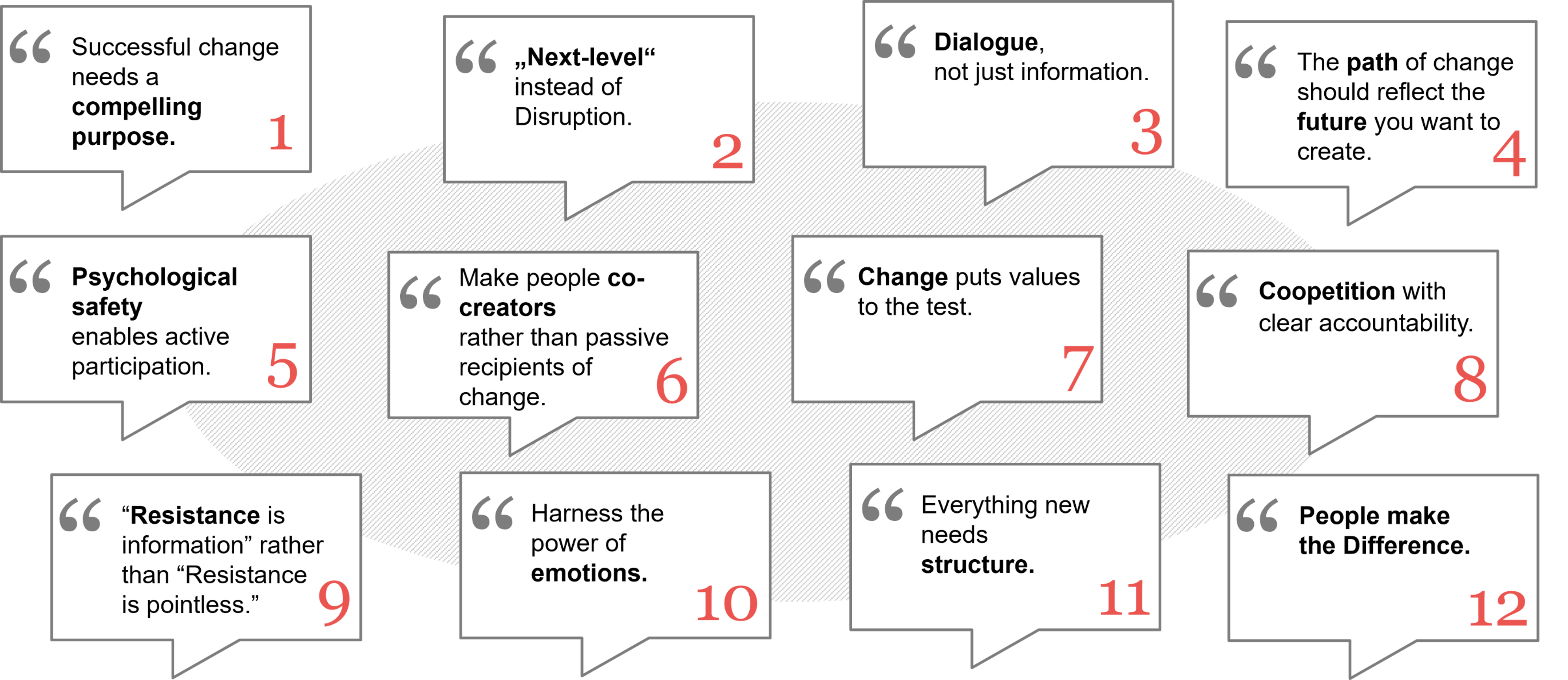
12 Theses from 5P
1. Successful change needs a compelling purpose.
People need to understand what is supposed to change, why it is important, and how progress can be measured. what is changing, why it matters, and what progress will look like.
2. “Next Level” Instead of Disruption.
Change is more likely to succeed when it builds on strengths and opens the door to the next meaningful step.
3. Dialogue, not just information.
Listening to questions, questions, perspectives, and concerns early on leads to better decisions and stronger engagement.
4. The path of change should reflect the future you want to create.
Structures, leadership, and participation should already embody the new ways.
5. Psychological safety enables active participation.
When people can speak openly without fear of negative consequences, mistakes and risks are identified earlier, and ideas can be put to use more quickly.
6. Make people co-creators rather than passive recipients of change.
Change gains momentum when employees take ownership and can bring in their experience, knowledge, and ideas.
7. Change puts values to the test.
Under pressure, it becomes clear whether decisions, leadership, and communication live up to stated values and standards.
8. Coopetition with clear accountability.
Cooperation and productive competition can drive change—provided roles, decision-rights and escalation paths are clearly defined.
9. “Resistance is information” rather than “Resistance is pointless.”
Resistance often reveals risks, underlying interests, or a lack of clarity. Those who understand it early on can make the change process stronger.
10. Harness the power of emotions.
Uncertainty, anger, grief, or confidence offer valuable clues about what people need to understand, process, and support change.
11. Everything new needs structure.
Renewal only gains hold when accountability, resources, decisions, and implementation are clearly defined.
12. People make the Difference.
Structures provide the framework—but change only becomes real when people take ownership, learn, and bring new ways of working into everyday practice.
These 12 theses provide guidance, participation, and clear implementation in the 5P Change Performance approach. They help make change easier to understand, decisions more robust, and progress visible in everyday work.
Structured Change: Five Phases to Successful Transformation
Change becomes effective when direction, participation, and implementation reinforce each other systematically. The 5P Change process takes your organization through five phases, from defining the direction for change to embedding new ways of working in everyday practice. Each phase creates tangible outcomes and builds the foundation for the next.
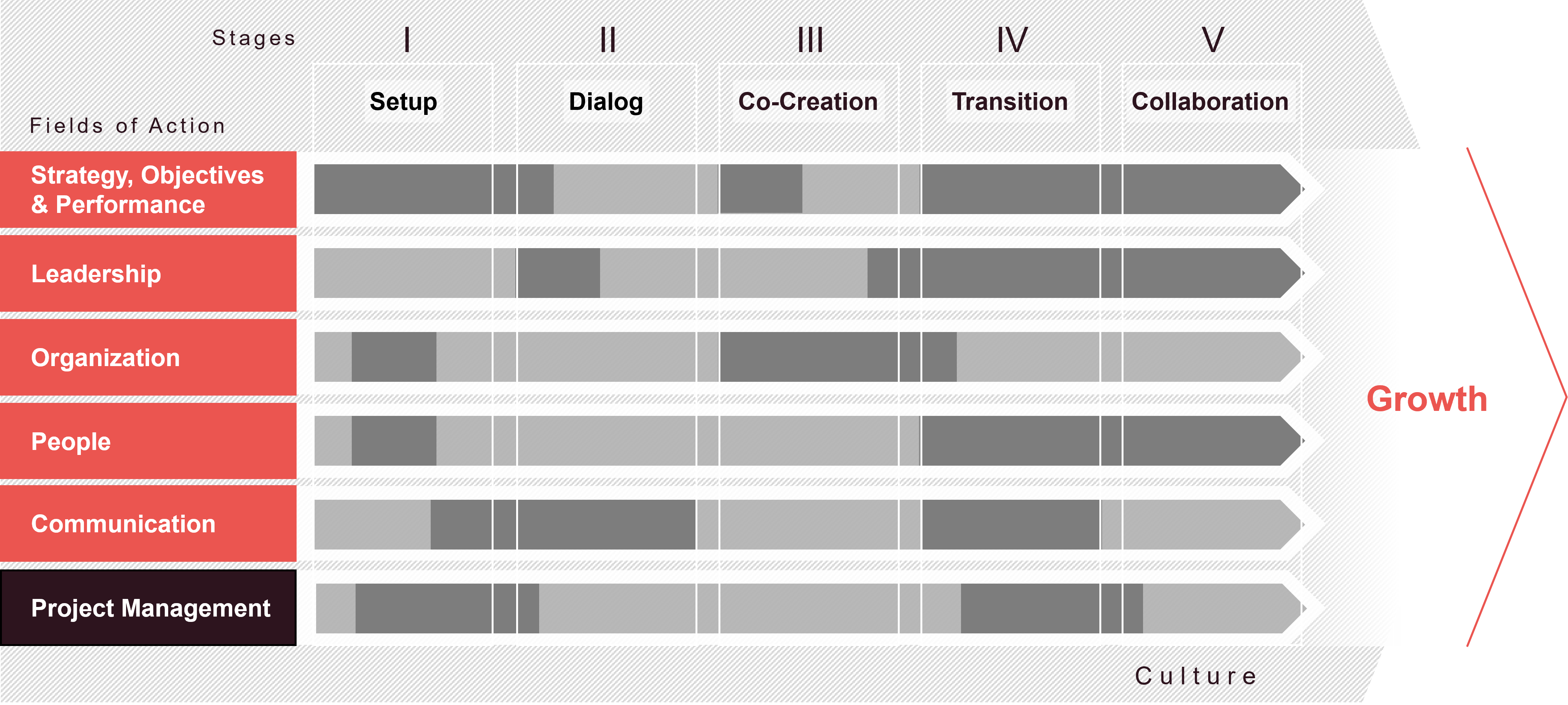
1. Setup – Establishing Direction and Gaining Clarity
Together with the management team, we clarify what needs to change, why it matters, and how success will be defined and evaluated. We define goals, scope, responsibilities, and project setup. Clear key messages create a shared understanding of the transformation right from the outset.
2. Dialogue – Enabling Participation and Building Trust
We build a realistic picture of the organization and its key stakeholders. Interviews, workshops, and dialogue formats bring different perspectives, experiences, and concerns into view. These insights feed into the planning process and enhance the quality of decision-making, acceptance, and shared responsibility.
3. Co-Creation – Shaping the Future Together
Together, we develop sustainable solutions for strategy, structures, processes, roles, and collaboration. Key stakeholders contribute their knowledge and take ownership for the outcome. The result isa solution from within the organization—one that is well-founded and ready to use.
4. Transition – Implementing and Embedding Change
Now it’s time to get down to business: the future organization is implemented. New processes are introduced, roles are clarified or reassigned, and employees are supported during transitions. A clear handover from the project team to line management ensures accountability, enables action and an effective implementation in day-to-day operations. A clear handover from the project team to line management ensures ownership, decision-making authority, and effective implementation in day-to-day operations.
5. Collaboration – Strengthening Culture and Enabling Continuous Evolution
Together, we stabilize the new collaboration structure and develop it Purposefully. Feedback, evaluation, and regular adjustments help identify what is already working and where adjustments are needed. Over time, adaptability becomes embedded in the organization’s culture—both internally and in collaboration with partners.
Change moves from intention to visible progress. Together we create lasting impact and future readiness. Let´s talk about your transformation goals.